What this enables
Foam-based actuation turns the internal structure of a soft machine into part of its form. Instead of designing around a fixed channel layout, the actuator can be sculpted for the movement it needs to make.
This project focused on the development of a novel class of soft actuator that replaced traditional straight pneumatic channels with a porous foam.
The approach allows more flexibility when shaping an actuator and removes the need for a rigid soft robot mold.
Foam actuators pair an open-cell elastomer core with a thin, nonporous elastomer skin. The connected pores carry air through the body, so the actuator can be cast, cut, or sculpted into forms that would be difficult to build from conventional channels. This approach grew from work at the Organic Robotics Lab at Cornell University.
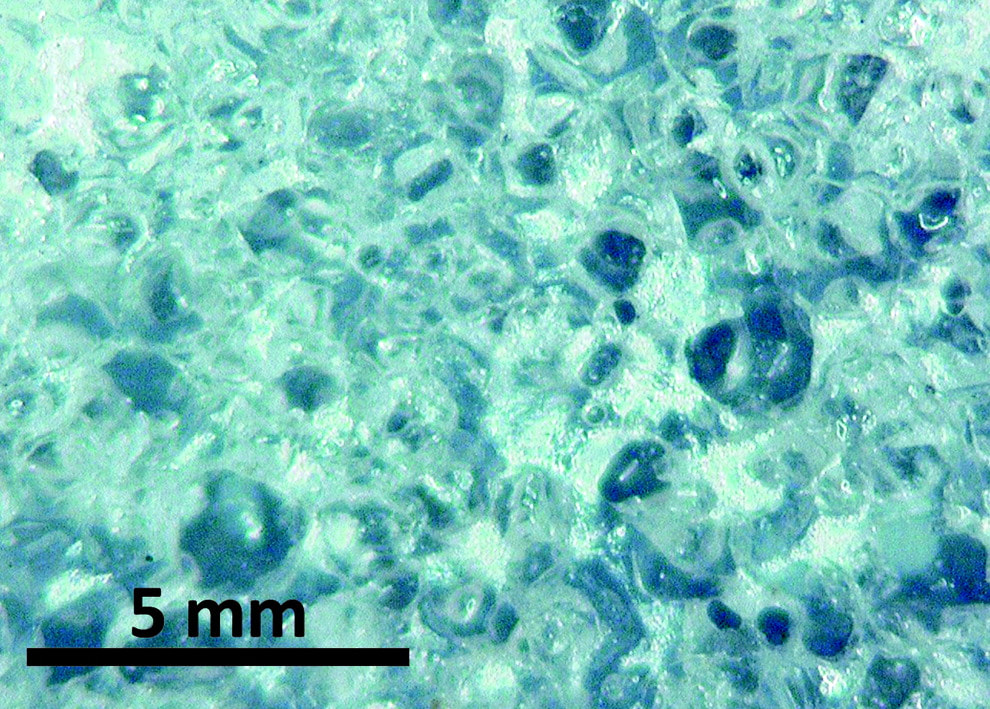
Foam-based actuation turns the internal structure of a soft machine into part of its form. Instead of designing around a fixed channel layout, the actuator can be sculpted for the movement it needs to make.
In the actuator, the pore network becomes the fluid path, and the material can be fabricated with a controllable level of porosity. Combined with a nonporous coating and selectively applied, non-extensible layers, the actuator can achieve complex, programmable deformations.