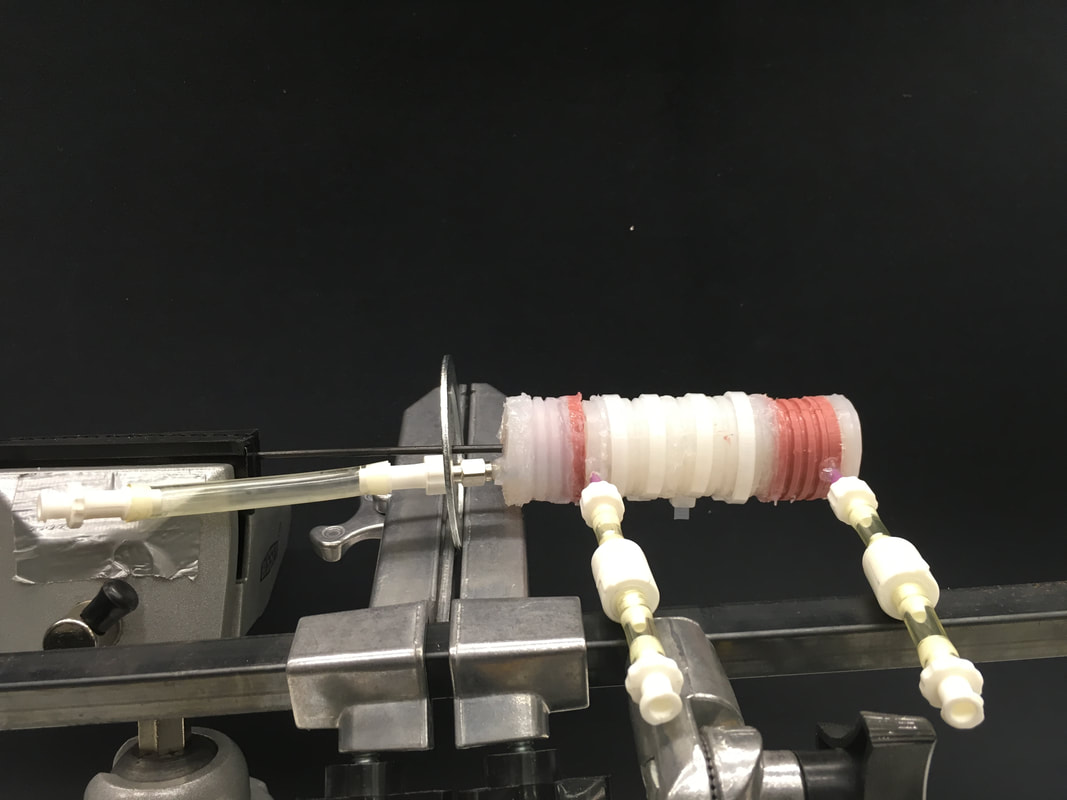
Forward segment
Holds on to the artificial "bone," anchoring the leading edge of the actuator to direct the extension of the rest of the body.
This project forcused on the development of a novel soft actuator inspired by the hydrostatic lengthening of the chameleon tongue. Chameleons use contractor muscles to stretch layers of collagenous tissue along a hyoid bone to building up elastic energy which can be released in a burst to project the tongue forward at high speed.
To reproduce this mechanism, I designed and fabricated a multi-segment soft robotic actuator that mirrors the different stages of the tongue's energy build-up and release. A forward segment grips the artificial "bone," a middle segment extends and stores elastic energy, and a back segment anchors the actuator until the stored energy is ready to be released.
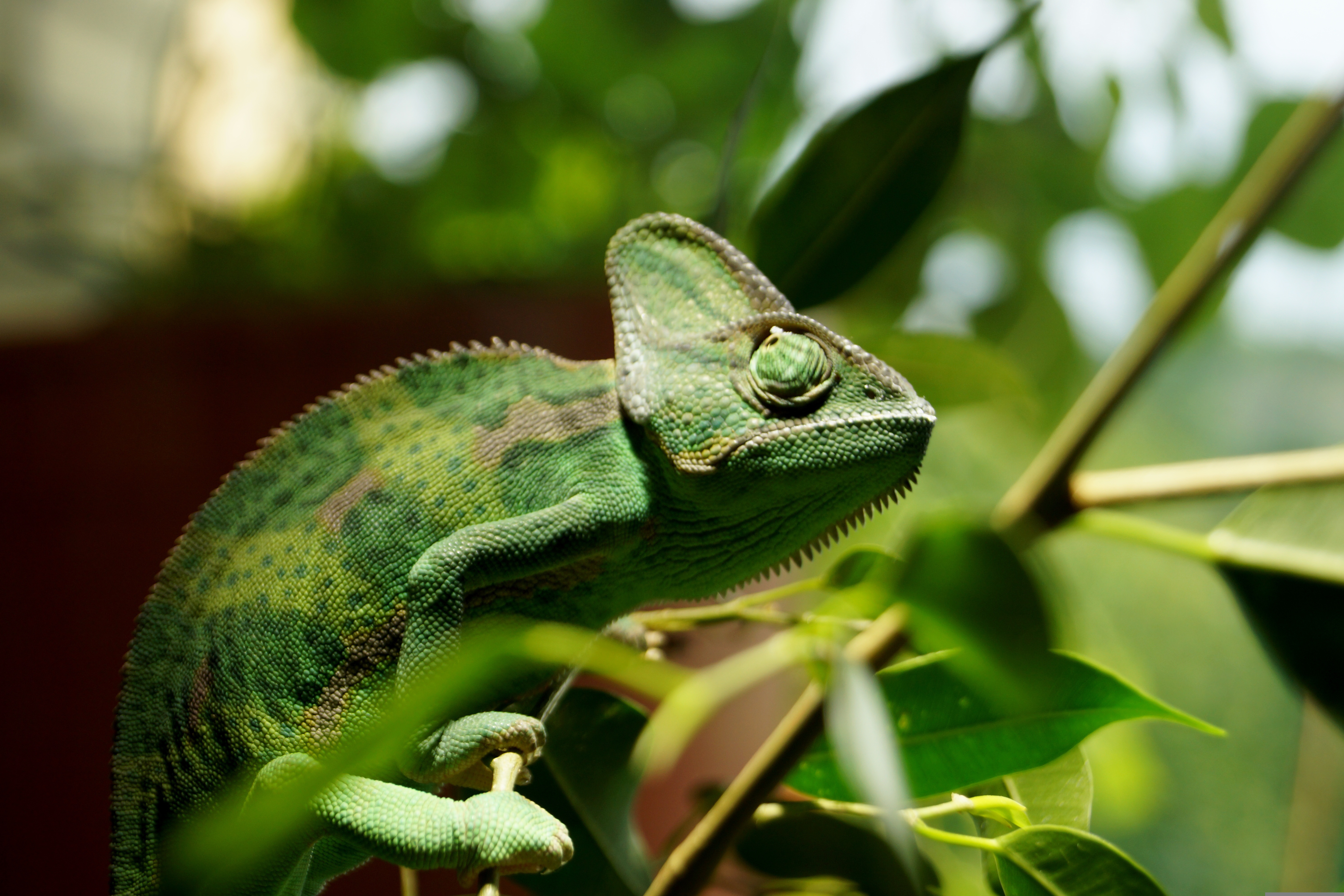
A chameleon’s tongue strike is one of the fastest movements in the animal kingdom relative to its size. Its muscles stretch spring-like tissue inside the tongue, storing energy that is released all at once to launch it forward. That sequence of stretching, storing, and releasing energy became the design brief for this actuator.
Each segment of the actuator plays the role of a different structure in the biological tongue, working together to build up and release elastic energy.
Holds on to the artificial "bone," anchoring the leading edge of the actuator to direct the extension of the rest of the body.
Pneumatic pressure extends the middle region along the bone, stretching the elastic walls of the actuator. Once anchored, pressure is relieved, leaving just the stored elastic energy.
Anchors the actuator assembly in place until the stored energy is ready to be released, projecting the actuator forward at speed.
Slowed footage shows the forward motion of the actuator assembly once the anchor is released with a peak speed of 1.1 m/s.
A model of the three-segment actuator, showing the forward grip, extending middle body, and anchoring back segment.